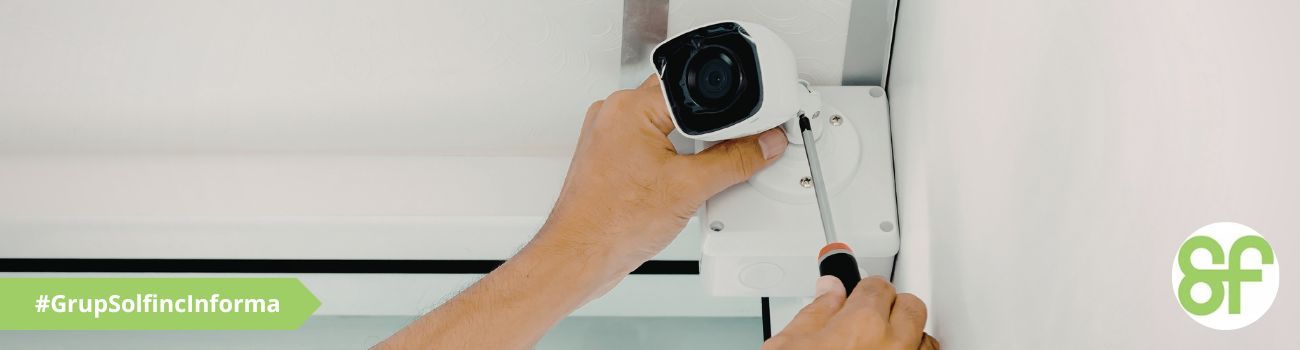
Installing a security camera in a homeowners’ community may seem like a simple solution to improve building surveillance, but it’s not always as easy as putting it up and starting to record. You need to consider neighbors’ privacy, data-protection rules, the community’s agreement, and the real use that will be made of the images. At Solfinc, we know these decisions raise many questions in homeowners’ communities: does it need to be approved at a meeting, where can cameras be placed, who can view the recordings? In this article, we explain the key points to do it correctly and avoid problems.
Improve your community management with professional support
At Solfinc, we help you manage your community with more clarity, follow-up, and day-to-day peace of mind.

Need and benefits of security cameras in communities
Security cameras have become an essential tool to increase protection in homeowners’ communities. Their implementation offers multiple benefits that contribute to the safety and well-being of all neighbors.
Protection of neighbors and common areas
Installing security cameras in common areas acts as a security reinforcement for all residents. These devices protect not only individual properties, but also shared spaces such as gardens, corridors, and garages. With a surveillance system in place, neighbors feel safer and supported, which can improve quality of life in the community.
Deterrence of theft and vandalism
The mere presence of cameras can deter potential offenders. Knowing they are being recorded, individuals who might try to commit theft or damage property think twice before acting. This deterrent effect translates into a significant reduction in criminal incidents in communities where security systems have been implemented.
- Reduction in the number of thefts.
- Fewer acts of vandalism in shared areas.
- Increased sense of security among neighbors.
Evidence and conflict resolution through images
Recordings provided by cameras are a valuable resource in the event of disputes or conflict situations. Images can serve as evidence in events related to property damage or incidents in common areas. Having visual evidence makes conflict resolution easier and allows informed decisions to be made in community meetings.
On the other hand, these recordings can help identify inappropriate behavior, contributing to a more harmonious living environment. Being able to rely on clear, precise images makes it possible to address problems more efficiently, benefiting the whole community.
Legal framework for installing cameras in homeowners’ communities
The legal framework governing the installation of cameras in homeowners’ communities in Spain is essential to ensure both neighbors’ security and respect for privacy. There are specific regulations that must be considered before proceeding with installation.
Horizontal Property Act and its application
The Horizontal Property Act sets out how decisions must be made within a homeowners’ community. In the case of installing video-surveillance cameras, this law plays a crucial role.
Requirements for approval at the homeowners’ meeting
For the video-surveillance system to be legal, you must follow an approval procedure that goes through the homeowners’ meeting. Neighbors must be consulted and a consensus must be reached. This means presenting the proposal and discussing it in a meeting, where everyone has the opportunity to express their opinion.
Voting and required majority: three fifths
Installing surveillance cameras requires a qualified majority. Under the Horizontal Property Act, the support of three fifths of the owners present in the vote is required. This ensures the decision is democratic and represents the majority of the community. If this majority is not reached, the proposal cannot be carried out.
Data Protection Act and current regulations
The Data Protection Act, together with the General Data Protection Regulation (GDPR), imposes additional requirements that must be met to guarantee the right to privacy of people affected by video surveillance.
Owners’ rights regarding video surveillance
Owners have clearly defined rights in relation to the use of cameras in common areas. These rights include:
- Right to be informed about the installation of video cameras and the purpose of their use.
- Right to access recordings that concern them, and to request them if they are affected by any recording.
- Right to request deletion of images that are not necessary or that have been stored beyond the permitted period.
Obligations regarding information and visible signage
Homeowners’ communities are obliged to inform neighbors about the existence of security cameras in the building. To do so, visible signs must be posted indicating that the area is under video surveillance. These notices must include the identity of the data controller and how rights can be exercised in relation to the recordings.
In addition, it is important that the community keeps a record of processing activities for the captured images. This record must be kept up to date and available for review if required by the relevant authorities.
Regulating access to recordings is also essential. Only authorized personnel should have access to the images, ensuring they are handled properly and in accordance with current legislation.
Formal procedure for installing video-surveillance cameras
The installation of surveillance cameras in homeowners’ communities requires following a formal process to ensure compliance with current regulations. Below are the essential steps to carry out the installation properly.
Obtaining the community agreement
The first step in the procedure is obtaining the agreement of the homeowners’ community. To do so, a meeting must be called to discuss the installation proposal. During this meeting, the need for cameras and the benefits they will bring to the security of all residents must be presented.
It is essential that a vote is held at this meeting. The Horizontal Property Act requires a qualified majority, meaning that three fifths of the owners must agree. This ensures the majority’s opinion is respected and everyone’s concerns are considered.
Record of image-processing activities
Once the agreement is approved, the community must keep a record of processing activities for the images captured by the cameras. This record is essential to comply with data-protection law and ensure personal data is managed correctly.
The record must include:
- Description of the video-surveillance system.
- Purpose of the recording (security of common areas).
- Retention period for the recordings.
- Details of the data controller.
Communication and notice to residents
The law requires that all residents be informed about the installation of cameras and the processing of images. To do so, visible signs must be placed in the areas where the cameras will be installed. This information must state that there is a surveillance system, its purpose, and who the data controller is.
Such communication is important because it guarantees all residents’ right to information and promotes transparency in the management of community security.
Regulating access to recordings
It is essential to establish clear rules on access to recordings. Only authorized personnel—such as the community administrator or certain agreed residents—should have access to the images. This restriction protects residents’ privacy and ensures recordings are not misused.
A procedure should also be defined so that any owner who requests it can access recordings that concern them. This is part of their rights under current regulations, which aim to balance security with the protection of personal data.

Management and protection of personal data in communities
Managing personal data in homeowners’ communities that have video-surveillance systems is crucial to protect members’ privacy and comply with current regulations. Special attention is needed regarding how images and collected information are handled.
Record keeping and regulatory compliance
To ensure compliance with the Data Protection Act, it is essential to keep a record of processing activities for the images captured by the cameras. This record must detail:
- The type of personal data being captured.
- The purpose of recording images.
- The data retention period.
- The security measures implemented to protect that data.
This documentation is key for the community to demonstrate it is acting in accordance with the law. For that reason, it is recommended to carry out periodic reviews of this information, updating it to any changes that may arise in the community.
Authorized personnel for access to images
Only authorized personnel should have access to recordings made by security cameras. This includes those responsible for supervision, as well as community administrators. It is essential to define who has permissions and under what circumstances the recorded information can be accessed.
Residents must be informed about who is authorized to access the recordings and for what purpose. Access must be restricted to avoid misuse of the information collected.

Cooperation with the Spanish Data Protection Agency
The community must actively cooperate with the Spanish Data Protection Agency, ensuring that all residents’ rights regarding their personal data are respected. This cooperation includes responding to queries and requests that may arise about the use of cameras and data management.
It is also essential that the community stays up to date with any guidelines the Agency may issue regarding video surveillance. This means being prepared to make improvements and adjustments to the data management system when necessary.
Residents’ rights of access, rectification, and erasure
Owners have specific rights in relation to surveillance camera recordings. These rights include:
- Right of access: Residents can request to see images in which they appear directly.
- Right to rectification: The community must correct any incorrect data that has been recorded.
- Right to erasure: An owner can request that recordings concerning them be deleted, in certain circumstances.
The community must have a clear protocol on how these requests are handled. It is also essential to inform residents of these rights in a transparent and accessible way, fostering trust among community members.
Responsibilities and duties of owners and administrators
It is crucial that both owners and administrators understand their responsibilities and duties in relation to the video-surveillance system. Proper management of these systems not only protects residents’ privacy, but also helps maintain a safe environment.
Active participation in the homeowners’ meeting
Owners’ involvement in decisions related to the installation and operation of security cameras for communities is essential. To do so, they must attend meetings and exercise their right to vote, ensuring their opinions and concerns are heard. It is each owner’s responsibility to stay informed about the votes and decisions taken at these meetings.
Collaboration in maintenance and proper use of the system
The proper use and maintenance of video-surveillance equipment is the responsibility of all community members. Owners’ collaboration is essential to ensure cameras are used in accordance with current rules and kept in good condition. Carrying out periodic checks and reporting any technical problems are duties that should be assumed jointly.

Training and guidance on operation and security
To ensure the system operates properly, it is advisable for owners to receive specific training on operation and security measures related to the use of cameras. This training may include how to access recordings, the legal limits on capturing images, and how to act in the event of incidents. Shared knowledge among neighbors is a pillar for fostering a safe and respectful environment.
Practical tips for safe installation and use
The proper installation and management of a video-surveillance system is essential to maximize its benefits and ensure the corresponding legal compliance.
Hiring certified professionals for installation
It is crucial that the installation of security cameras for communities is carried out by experts. Qualified professionals have the technical knowledge to choose the right equipment and carry out an optimal installation. Ensuring the equipment complies with current regulations and that the process is properly planned will avoid future problems.
Regular maintenance of the video-surveillance system
Making sure the system is in good condition is essential. It is recommended to carry out periodic inspections to check:
- The correct operation of all cameras.
- The quality of the recordings and the internet connection, if IP cameras are used.
- The storage capacity of the devices and their configuration.
This maintenance will contribute not only to the effectiveness of the system, but also to compliance with data-protection rules, since poor recording quality could lead to misunderstandings or legal issues in certain incidents.
Clear, visible information for all users
It is mandatory to inform all residents about the installation of video cameras. Signs must be posted in visible areas including:
- The purpose of video surveillance.
- The data controller.
- Information about residents’ rights in relation to the recordings.
Transparency in these aspects fosters trust among residents, which will make coexistence easier and promote respect for the established rules.
Encouraging neighbors’ collaboration in community security
Integrating neighbors into the security plan is key. Promoting communication among residents about suspicious activities and the importance of video surveillance creates a participatory environment. Some methods include:
- Regular meetings to discuss community security.
- Creating a WhatsApp group or forum where neighbors can share concerns.
- Training programs on using the surveillance system.
This collaboration not only ensures everyone is informed, but also improves the effectiveness of the security system, making everyone feel part of the solution.
What penalties are there for breaching data-protection regulations?
Fines range from €900 to €600,000, depending on whether it is a minor, serious, or very serious infringement.
As you can see, installing a security camera in a community can be a good measure to reinforce neighbors’ peace of mind, as long as it is done thoughtfully and in compliance with the rules. Before making a decision, it’s worth assessing whether it is really necessary, approving it correctly, and making sure the installation respects everyone’s privacy. At Solfinc, we support homeowners’ communities with these processes so that each step is handled clearly, orderly, and safely.